Albert Park vapour intrusion testing
The Environment Protection Authority (EPA) has been undertaking environmental assessment in parts of Albert Park since 2019. This work has focused on trichloroethene (TCE) contamination of groundwater arising from historical industrial practices in the area.
Recent assessment of soil vapour in public spaces in the Albert Park EPA assessment area, including roadside verges, indicated that TCE vapour may be present in a small number of homes.
TCE in groundwater can become a vapour, migrate up through the soil, and enter buildings through crawlspaces, floorboards, and cracks and gaps in foundations. The movement of vapours into a building is called vapour intrusion. If vapour accumulates over a long time and no action is taken, the concentration can build up to unsafe levels. Even at relatively low levels, which we cannot smell, there may be a long-term health risk.
From September 2026, the EPA is offering vapour intrusion testing at specific properties where our assessment has identified a risk of vapour intrusion.
If you have been contacted by the EPA about vapour intrusion testing, please refer to your letter for further information.
Please contact the EPA community engagement team if you have any questions:
Email – engage.epa@sa.gov.au
Phone – (08) 8429 7554
The Environment Protection Authority (EPA) has been undertaking environmental assessment in parts of Albert Park since 2019. This work has focused on trichloroethene (TCE) contamination of groundwater arising from historical industrial practices in the area.
Recent assessment of soil vapour in public spaces in the Albert Park EPA assessment area, including roadside verges, indicated that TCE vapour may be present in a small number of homes.
TCE in groundwater can become a vapour, migrate up through the soil, and enter buildings through crawlspaces, floorboards, and cracks and gaps in foundations. The movement of vapours into a building is called vapour intrusion. If vapour accumulates over a long time and no action is taken, the concentration can build up to unsafe levels. Even at relatively low levels, which we cannot smell, there may be a long-term health risk.
From September 2026, the EPA is offering vapour intrusion testing at specific properties where our assessment has identified a risk of vapour intrusion.
If you have been contacted by the EPA about vapour intrusion testing, please refer to your letter for further information.
Please contact the EPA community engagement team if you have any questions:
Email – engage.epa@sa.gov.au
Phone – (08) 8429 7554
-
What is vapour intrusion?
Some chemicals in groundwater, including TCE, can evaporate into a vapour. The vapour can migrate up through the soil and enter buildings through crawlspaces, floorboards, and cracks and gaps in foundations. The movement of vapours into a building is called vapour intrusion.
-
Vapour intrusion testing
Vapour intrusion testing can involve collecting samples from indoor air, air beneath the floor, and air within the soils. These testing results, along with information on the property and the contamination under the ground, will help determine whether vapour intrusion may be occurring above safe levels.
Access to your home
Day 1 – Approximately 2 hours for the placement of air samplers and to install a soil vapour bore or sub-slab vapour pin at the property (if required and agreed by the owner). We will also ask you about your house’s construction, household products you use, and ventilation to understand household activities that may influence the testing results.
Day 10 to 14 – Approximately 2 hours to collect air samplers and sample the soil vapour bore or sub-slab vapour pins (if installed).
EPA contractor
The EPA has engaged a specialist site contamination contractor to complete the testing. EPA representatives will be present at all times during the placement and collection of samplers at your home. Contractor staff undertaking the works have completed all relevant EPA security checks.
Indoor air sampling
Indoor air sampling will involve the placement of small passive air samplers at up to five locations within the residence including the main living area and bedrooms.
The passive air samplers do not make noise.
The air samplers will remain in place for 10 to 14 days and then be collected by the EPA for laboratory testing.
The passive air samplers must not be touched or moved during the sampling period.
Under-floor air sampling
Raised floor (stump and bearer) properties
For properties with raised floors (typically timber), it may be possible to install small passive air samplers through existing sub-floor access doors or through external vents. Where this is not possible, other options to access the sub-floor are available and will be discussed and agreed with the owner.
The passive air samplers used do not make noise.
The air samplers will remain in place for 10 to 14 days and then be collected by the EPA for laboratory testing.
The passive air samplers must not be touched or moved during the sampling period.
Slab on ground properties
For properties with a concrete slab on ground foundation, up to two small holes (1.6 cm in diameter) may need to be drilled through the concrete slab at discrete locations and a stainless steel sub-slab vapour pin installed. This sub-slab vapour pin is covered with a flush mount stainless steel cap (5 cm in diameter).
Locations of the sub-slab vapour pins will be discussed and agreed with the owner. These are typically installed in the garage/carport.
When collecting the indoor air samplers, the EPA will collect a soil vapour sample from the sub-slab vapour pin for laboratory testing.
Installing and sampling a soil vapour bore
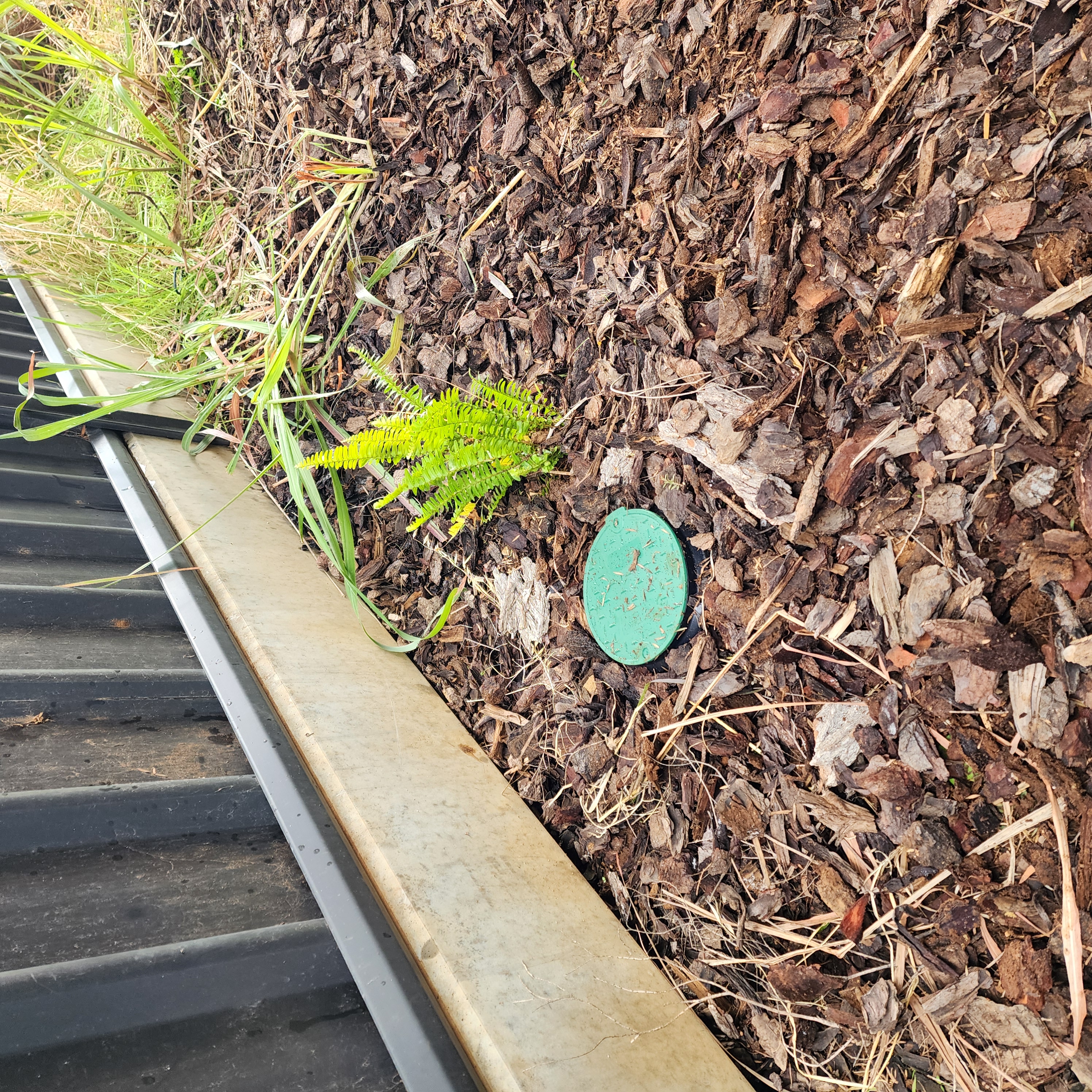
Installation will involve digging a small borehole using a hand auger (5 cm in diameter) to approximately 1.5 m below the ground surface. A metal probe will be inserted at the bottom of the hole with plastic tubing leading to the surface. The borehole will then be backfilled with sand. The soil vapour bore will be finished with a plastic cover (20 cm in diameter) that is flush with the ground surface.
The location of the soil vapour bore will be discussed and agreed with the owner. These are typically installed within a garden bed.
A Before You Dig Australia accredited service locator will check for underground services (water pipes, gas lines, electrical and communication cables) prior to commencing the installation of the soil vapour bore.
When collecting the indoor air samplers, the EPA will collect a soil vapour sample from the soil vapour bore for laboratory testing.
Passive air sampler used for indoor and under floor air sampling
Summa canister used for soil vapour bore or sub-slab vapour pin sampling
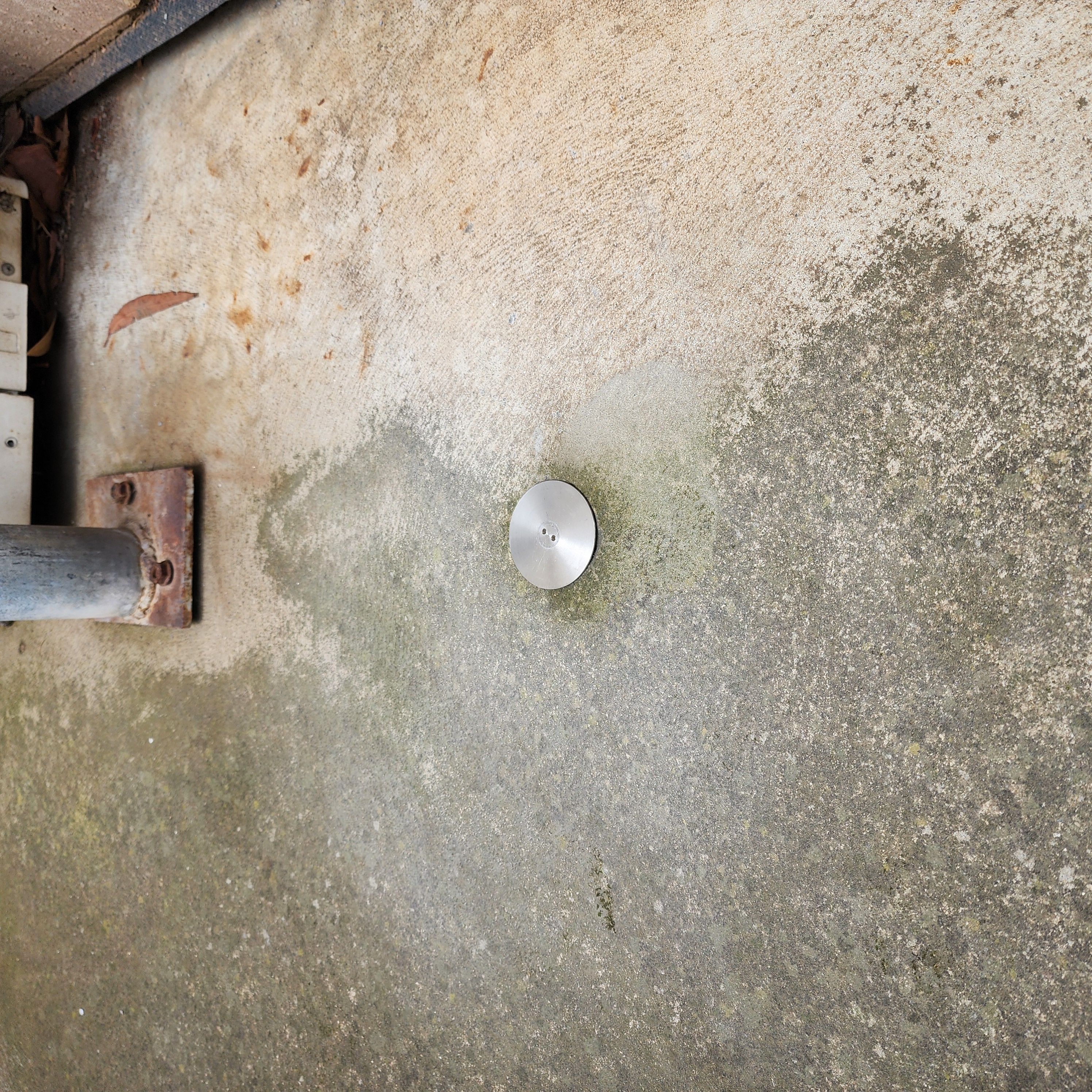
Sub-slab vapour pin with flush mount stainless steel cap (5 cm diameter)
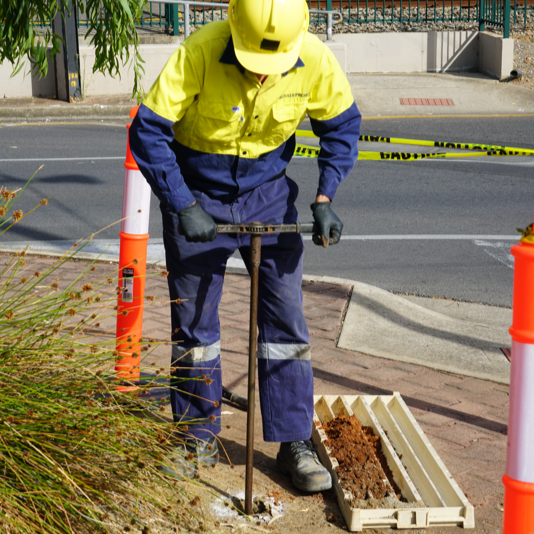
Installing a soil vapour bore with a hand auger
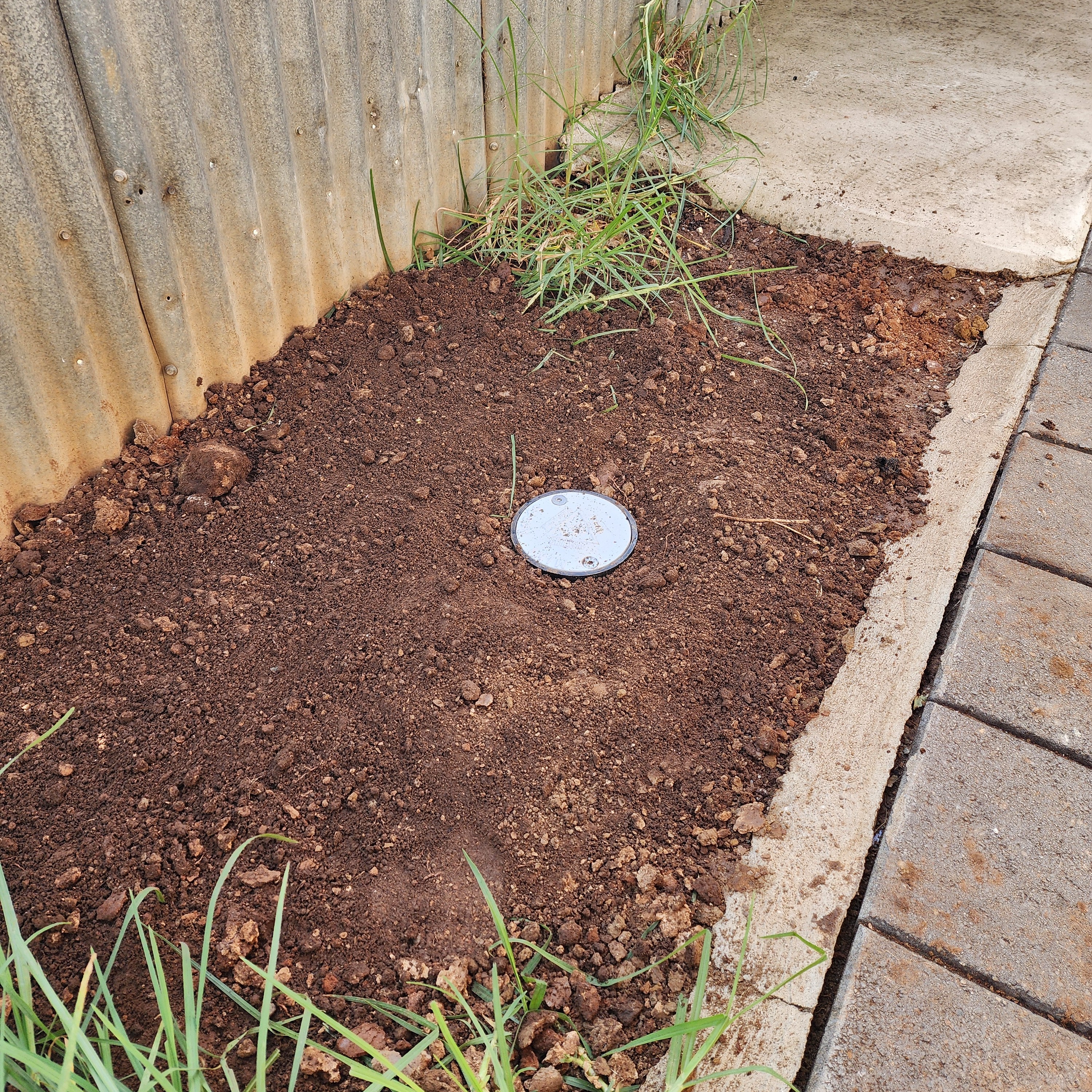
Soil vapour bore installed in a garden area
Soil vapour bore installed in a garden areaVapour intrusion testing can involve collecting samples from indoor air, air beneath the floor, and air within the soils. These testing results, along with information on the property and the contamination under the ground, will help determine whether vapour intrusion may be occurring above safe levels.
Access to your home
Day 1 – Approximately 2 hours for the placement of air samplers and to install a soil vapour bore or sub-slab vapour pin at the property (if required and agreed by the owner). We will also ask you about your house’s construction, household products you use, and ventilation to understand household activities that may influence the testing results.
Day 10 to 14 – Approximately 2 hours to collect air samplers and sample the soil vapour bore or sub-slab vapour pins (if installed).
EPA contractor
The EPA has engaged a specialist site contamination contractor to complete the testing. EPA representatives will be present at all times during the placement and collection of samplers at your home. Contractor staff undertaking the works have completed all relevant EPA security checks.
Indoor air sampling
Indoor air sampling will involve the placement of small passive air samplers at up to five locations within the residence including the main living area and bedrooms.
The passive air samplers do not make noise.
The air samplers will remain in place for 10 to 14 days and then be collected by the EPA for laboratory testing.
The passive air samplers must not be touched or moved during the sampling period.
Under-floor air sampling
Raised floor (stump and bearer) properties
For properties with raised floors (typically timber), it may be possible to install small passive air samplers through existing sub-floor access doors or through external vents. Where this is not possible, other options to access the sub-floor are available and will be discussed and agreed with the owner.
The passive air samplers used do not make noise.
The air samplers will remain in place for 10 to 14 days and then be collected by the EPA for laboratory testing.
The passive air samplers must not be touched or moved during the sampling period.
Slab on ground properties
For properties with a concrete slab on ground foundation, up to two small holes (1.6 cm in diameter) may need to be drilled through the concrete slab at discrete locations and a stainless steel sub-slab vapour pin installed. This sub-slab vapour pin is covered with a flush mount stainless steel cap (5 cm in diameter).
Locations of the sub-slab vapour pins will be discussed and agreed with the owner. These are typically installed in the garage/carport.
When collecting the indoor air samplers, the EPA will collect a soil vapour sample from the sub-slab vapour pin for laboratory testing.
Installing and sampling a soil vapour bore
Installation will involve digging a small borehole using a hand auger (5 cm in diameter) to approximately 1.5 m below the ground surface. A metal probe will be inserted at the bottom of the hole with plastic tubing leading to the surface. The borehole will then be backfilled with sand. The soil vapour bore will be finished with a plastic cover (20 cm in diameter) that is flush with the ground surface.
The location of the soil vapour bore will be discussed and agreed with the owner. These are typically installed within a garden bed.
A Before You Dig Australia accredited service locator will check for underground services (water pipes, gas lines, electrical and communication cables) prior to commencing the installation of the soil vapour bore.
When collecting the indoor air samplers, the EPA will collect a soil vapour sample from the soil vapour bore for laboratory testing.
Passive air sampler used for indoor and under floor air sampling
Summa canister used for soil vapour bore or sub-slab vapour pin sampling
Sub-slab vapour pin with flush mount stainless steel cap (5 cm diameter)
Installing a soil vapour bore with a hand auger
Soil vapour bore installed in a garden area
Soil vapour bore installed in a garden area -
Reducing vapour intrusion into your home
This information has been prepared for homeowners and residents living in areas where there is potential for vapour intrusion caused by historical site contamination. It provides simple measures to increase ventilation in your home, in an attempt to reduce the concentration of vapours in the indoor air.
Open windows and doors
Opening external windows, doors and vents can increase the air flow inside the house and reduce the potential build-up of vapours. Keeping windows slightly open when possible may also be effective.
Reducing the time that a house is fully closed can prevent vapour build-up, as can ‘airing it out’ when you come home after it has been fully closed.
If vapour intrusion is likely to be an issue, the most important rooms to consider ventilating are those that people spend the most time in, such as bedrooms and living rooms. You can promote the movement of fresh air by opening windows or doors at opposite ends of the house to allow the natural airflow to replace indoor air with fresh air from outside.
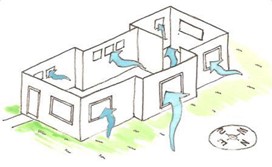
Promote natural breezes by opening windows
Under-floor ventilation
If your home has a crawlspace (the area between the floorboards and the ground), increasing ventilation through this space can reduce the amount of vapour that enters the indoor air in your house. This can be done by clearing vegetation and blockages away from ventilation points outside your home.
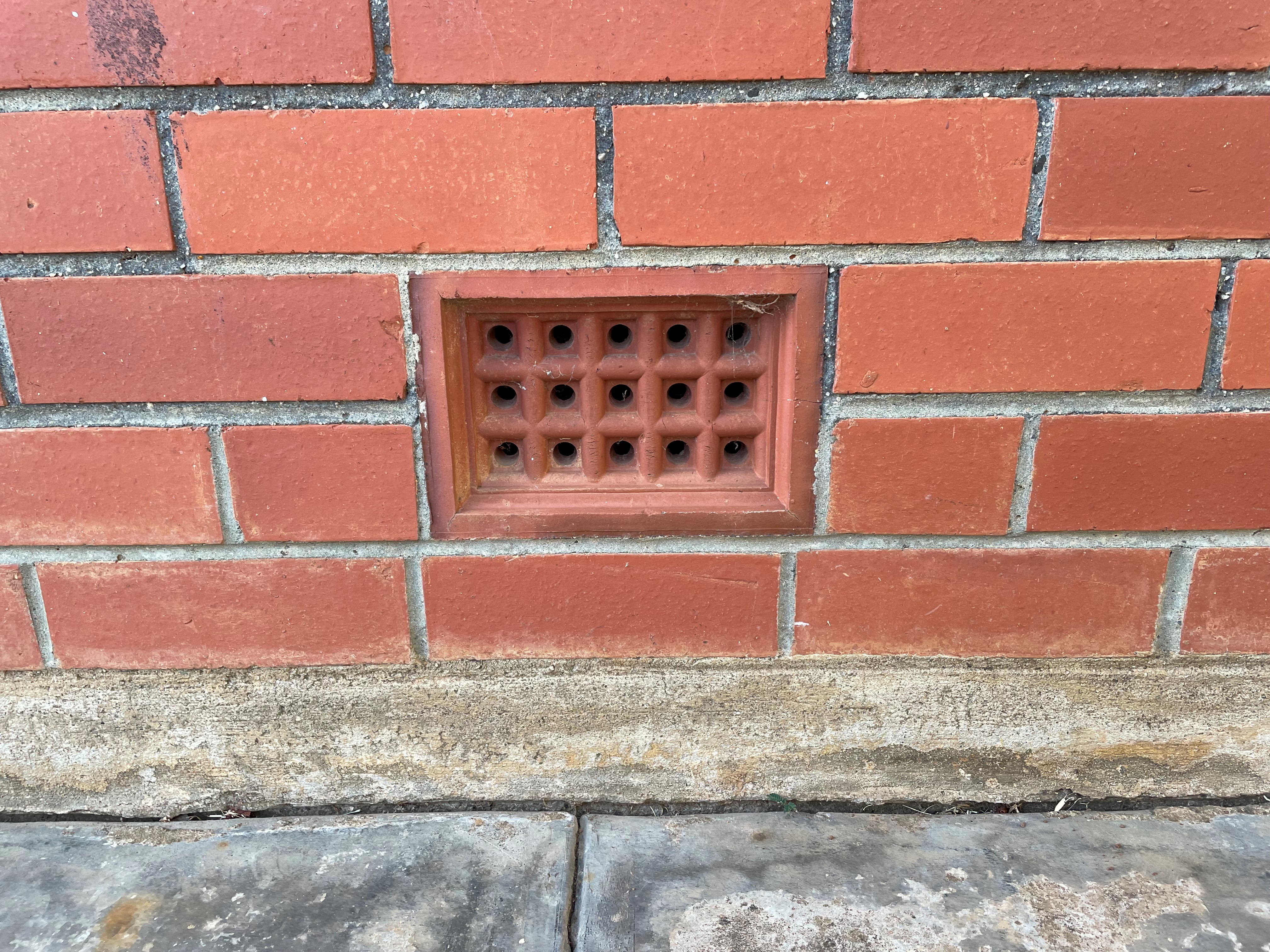
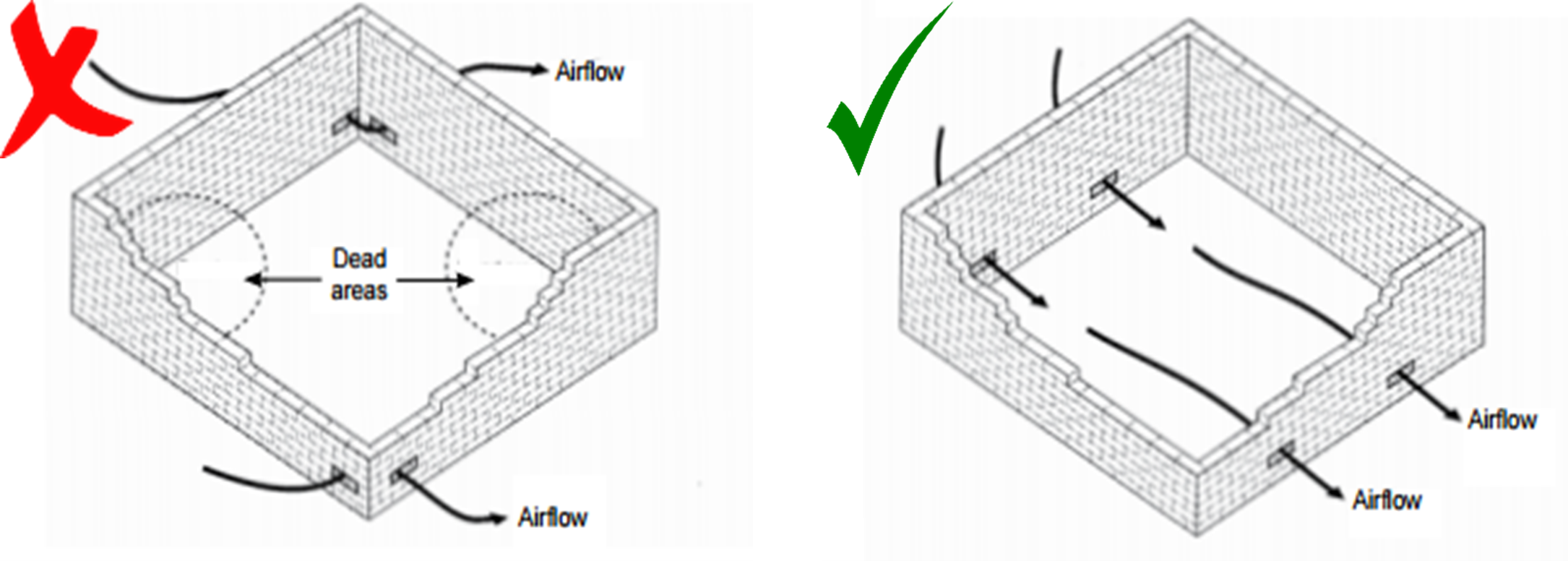
Ensure vents are clear to allow maximum airflow
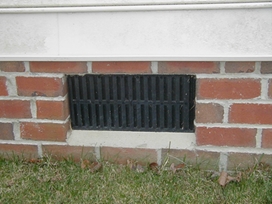
Replace older vents with newer vents
Ensure vent arrangement is effective for the prevailing wind conditionsOlder style vents (often made of clay) have smaller holes and tend to not ventilate as effectively as modern steel or plastic vents. Replacing older vents with newer vents may improve ventilation within the crawlspace.[1]
Installing additional vents in the crawlspace to increase airflow beneath a home may also reduce the concentrations of vapour accumulating inside the home.[2]
Keeping your floor in good condition
If you have timber floorboards, you can seal the gaps with a high-quality flexible (silicon) sealant available from hardware stores to ensure there are no holes or spaces for vapours to enter from below. This can also be effective for managing the energy efficiency of your home.
If your home is on a concrete slab, inspect underneath the carpet and ensure any cracks are sealed, if feasible. If it is not possible to access areas of your floor where cracks or gaps may exist, another solution might be to reconsider how different areas of the house are used. For example, rearranging rooms where the most time is spent will minimise the use of space where ventilation may be lowest, or where the flooring gaps allow air to be drawn in from below.
You should also consider sealing the gaps where pipes enter your home, such as in the bathroom, laundry and kitchen.
Other tips
Some household appliances, such as kitchen exhaust fans, rangehoods and bathroom fans, can create a suction effect by extracting air upwards and inadvertently drawing vapours in from below the house. If you have any of these appliances installed in your home, it is recommended that external windows and doors are kept open while you have them turned on. By keeping windows or doors open, air is mostly drawn in from the outside rather than from beneath the house.
Disclaimer
Information is intended as a good repair guide for homeowners and provides simple and practical advice for reducing vapours from site contamination inside the home. Where vapour intrusion is severe then further measures may be necessary to reduce indoor air concentrations. If you live in an area where site contamination has been identified and are concerned about potential vapour intrusion into your home, please contact the EPA.
[1] Reducing Radon – Improving natural under floor ventilation – Public Health England (June 2015)
[2] Radon Solution in Homes – Improving underfloor ventilation – BRE (November 2012)
This information has been prepared for homeowners and residents living in areas where there is potential for vapour intrusion caused by historical site contamination. It provides simple measures to increase ventilation in your home, in an attempt to reduce the concentration of vapours in the indoor air.
Open windows and doors
Opening external windows, doors and vents can increase the air flow inside the house and reduce the potential build-up of vapours. Keeping windows slightly open when possible may also be effective.
Reducing the time that a house is fully closed can prevent vapour build-up, as can ‘airing it out’ when you come home after it has been fully closed.
If vapour intrusion is likely to be an issue, the most important rooms to consider ventilating are those that people spend the most time in, such as bedrooms and living rooms. You can promote the movement of fresh air by opening windows or doors at opposite ends of the house to allow the natural airflow to replace indoor air with fresh air from outside.

Promote natural breezes by opening windows
Under-floor ventilation
If your home has a crawlspace (the area between the floorboards and the ground), increasing ventilation through this space can reduce the amount of vapour that enters the indoor air in your house. This can be done by clearing vegetation and blockages away from ventilation points outside your home.
Ensure vents are clear to allow maximum airflow
Replace older vents with newer vents
Ensure vent arrangement is effective for the prevailing wind conditionsOlder style vents (often made of clay) have smaller holes and tend to not ventilate as effectively as modern steel or plastic vents. Replacing older vents with newer vents may improve ventilation within the crawlspace.[1]
Installing additional vents in the crawlspace to increase airflow beneath a home may also reduce the concentrations of vapour accumulating inside the home.[2]
Keeping your floor in good condition
If you have timber floorboards, you can seal the gaps with a high-quality flexible (silicon) sealant available from hardware stores to ensure there are no holes or spaces for vapours to enter from below. This can also be effective for managing the energy efficiency of your home.
If your home is on a concrete slab, inspect underneath the carpet and ensure any cracks are sealed, if feasible. If it is not possible to access areas of your floor where cracks or gaps may exist, another solution might be to reconsider how different areas of the house are used. For example, rearranging rooms where the most time is spent will minimise the use of space where ventilation may be lowest, or where the flooring gaps allow air to be drawn in from below.
You should also consider sealing the gaps where pipes enter your home, such as in the bathroom, laundry and kitchen.
Other tips
Some household appliances, such as kitchen exhaust fans, rangehoods and bathroom fans, can create a suction effect by extracting air upwards and inadvertently drawing vapours in from below the house. If you have any of these appliances installed in your home, it is recommended that external windows and doors are kept open while you have them turned on. By keeping windows or doors open, air is mostly drawn in from the outside rather than from beneath the house.
Disclaimer
Information is intended as a good repair guide for homeowners and provides simple and practical advice for reducing vapours from site contamination inside the home. Where vapour intrusion is severe then further measures may be necessary to reduce indoor air concentrations. If you live in an area where site contamination has been identified and are concerned about potential vapour intrusion into your home, please contact the EPA.
[1] Reducing Radon – Improving natural under floor ventilation – Public Health England (June 2015)
[2] Radon Solution in Homes – Improving underfloor ventilation – BRE (November 2012)
-
Understanding the potential health impacts of TCE
The main chemical of concern in the Albert Park EPA assessment area is trichloroethene (TCE). TCE is a colourless liquid industrial chemical that is used widely in industry for metal cleaning and in the production of products such as adhesives, lacquers, dyes, perfumes and soaps.
In the past, TCE was also used in many other applications such as removing caffeine from coffee beans in the production of decaffeinated coffee, in dry cleaning and as an anaesthetic for surgery. In the environment, TCE breaks down rapidly in air and surface water but much more slowly in soil and groundwater.
For information about the health impacts related to groundwater contamination and exposure to TCE, visit:
Chlorinated solvents in groundwater | SA Health
Trichloroethene (TCE) | SA HealthThe main chemical of concern in the Albert Park EPA assessment area is trichloroethene (TCE). TCE is a colourless liquid industrial chemical that is used widely in industry for metal cleaning and in the production of products such as adhesives, lacquers, dyes, perfumes and soaps.
In the past, TCE was also used in many other applications such as removing caffeine from coffee beans in the production of decaffeinated coffee, in dry cleaning and as an anaesthetic for surgery. In the environment, TCE breaks down rapidly in air and surface water but much more slowly in soil and groundwater.
For information about the health impacts related to groundwater contamination and exposure to TCE, visit:
Chlorinated solvents in groundwater | SA Health
Trichloroethene (TCE) | SA Health
For further information, please contact the EPA community engagement team:
Email – engage.epa@sa.gov.au
Phone – (08) 8429 7554