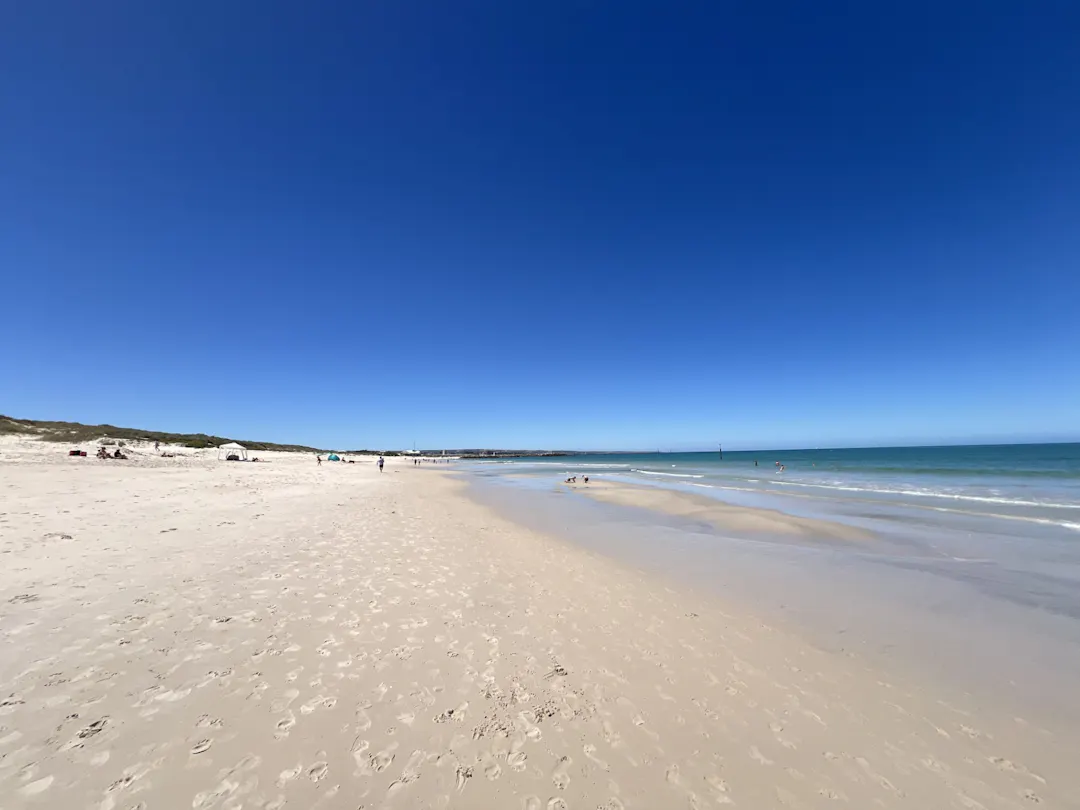
DEW has been granted an EPA licence for dredging at North Haven, with sand placement at Henley Beach South and West Beach. On 17 September, the EPA licence (#52536) was transferred to the contractor undertaking the dredging works, Heron Construction Company Limited.
The EPA received a licence application (ENL28KXAMPN) from DEW in May 2026 for dredging proposed as part of Phase II of DEW’s dredge trial to manage erosion and sand build-up along the Adelaide coast from West Beach to North Haven.
The EPA undertook a detailed assessment of the licence application, including the Dredge Management Plan (DMP), Water Quality Monitoring Plan (WQMP), Seagrass Monitoring Plan (SMP), Noise Monitoring Plan (NMP), and Community and Stakeholder Engagement Plan submitted by DEW. Technical experts in compliance, marine science, and noise assessed these plans and the proposed management and monitoring measures to ensure that the controls applied would, as far as is reasonably practicable, minimise harm to the environment.
The EPA also carefully considered submissions that were made in response to the licence application. The key themes raised in the submissions received are summarised below.
Based on its assessment, and accounting for community and stakeholder submissions, the EPA granted a licence for the proposed dredging. The EPA required changes to the DMP and an updated DMP has been approved. The dredge contractor undertaking the works is required to implement the approved DMP.
Community and stakeholder feedback
The EPA thanks community members and stakeholders who took the time to provide feedback. The EPA received 79 submissions during the two-week feedback period from 10 to 24 July. A broad range of considerations were raised, with levels of both support and opposition expressed. The key themes raised included management of noise impacts, sand and sediment quality, potential impacts from the 2025–26 harmful algal bloom, assessment of seagrass habitats, turbidity impacts from double handling of dredged sand, availability of monitoring data, the need for improved community and stakeholder engagement by DEW, and EPA assessment of compliance.
In line with the EP Act, the EPA forwarded a copy of all submissions to DEW and provided an opportunity for DEW to respond to submissions. DEW provided a response to all submissions received and these were further considered in the EPA’s assessment of the application.
DEW has been granted an EPA licence for dredging at North Haven, with sand placement at Henley Beach South and West Beach. On 17 September, the EPA licence (#52536) was transferred to the contractor undertaking the dredging works, Heron Construction Company Limited.
The EPA received a licence application (ENL28KXAMPN) from DEW in May 2026 for dredging proposed as part of Phase II of DEW’s dredge trial to manage erosion and sand build-up along the Adelaide coast from West Beach to North Haven.
The EPA undertook a detailed assessment of the licence application, including the Dredge Management Plan (DMP), Water Quality Monitoring Plan (WQMP), Seagrass Monitoring Plan (SMP), Noise Monitoring Plan (NMP), and Community and Stakeholder Engagement Plan submitted by DEW. Technical experts in compliance, marine science, and noise assessed these plans and the proposed management and monitoring measures to ensure that the controls applied would, as far as is reasonably practicable, minimise harm to the environment.
The EPA also carefully considered submissions that were made in response to the licence application. The key themes raised in the submissions received are summarised below.
Based on its assessment, and accounting for community and stakeholder submissions, the EPA granted a licence for the proposed dredging. The EPA required changes to the DMP and an updated DMP has been approved. The dredge contractor undertaking the works is required to implement the approved DMP.
Community and stakeholder feedback
The EPA thanks community members and stakeholders who took the time to provide feedback. The EPA received 79 submissions during the two-week feedback period from 10 to 24 July. A broad range of considerations were raised, with levels of both support and opposition expressed. The key themes raised included management of noise impacts, sand and sediment quality, potential impacts from the 2025–26 harmful algal bloom, assessment of seagrass habitats, turbidity impacts from double handling of dredged sand, availability of monitoring data, the need for improved community and stakeholder engagement by DEW, and EPA assessment of compliance.
In line with the EP Act, the EPA forwarded a copy of all submissions to DEW and provided an opportunity for DEW to respond to submissions. DEW provided a response to all submissions received and these were further considered in the EPA’s assessment of the application.